
INTRODUCTION
Where do new fields of science and technology come from?
They're made, of course. Small groups of people gather around a nascent idea and wonder together: what's possible here? From there, fields are bootstrapped and buoyed through the valley of disbelief by consistent attention and tending, often with scant resources.
There’s a good argument that field building is the most effective way to advance the technoscientific frontier.1 Younger fields have more unknowns, and thus more opportunity for novel discoveries and technological leaps. But jumping into a new field also means more risk, for both scientists and funders. It's possible the field doesn't yield anything interesting, or gets snuffed out before any of the big ideas can crystallize into a major breakthrough or tool.
Despite the importance of new fields, their creation is rarely encouraged or supported by the institutions that govern science. It's almost as if they happen by accident. A study of field-building histories reveals an even more pernicious reality: new fields are often discouraged from taking hold. Established fields, with their rigid social hierarchies and expectations, don't always take kindly to ideas in their borderlands.
With such headwinds, new fields are born only because of the champions and community builders who push the work forward. These are the "field builders"—one or more people who set aside their personal ambitions for the good of advancing a body of research or a realm of technology development. They are connectors, instigators, and storytellers. They do the foundational work, so that other researchers, organizations, and institutions can race ahead—a rising-tide-lifts-all-boats sort of attitude.
My hypothesis is that we can systematically build new fields of science and technology. The way is simple: encourage more field builders to take up the job and give them just enough resources to begin the journey. Mostly, it means equipping them with information about how to go about the so-far underrated work of field building.
We're launching a Field Building Accelerator to sharpen the thesis through experience—truly applied metascience. You can apply to join and try your hand at building a new field. We’ll be learning together.
Why start a field
The best reason to kickstart a new field is when an idea needs more minds.
Any number of circumstances can create the need: a scientific discovery turns into a series of surprising questions, like when the Miller-Urey experiment inspired researchers to probe explanations for the Origins of Life; or a technology becomes suddenly available, like when affordable MEMS sensors and cheap, single-board computers enabled the DIY Drones community to imagine a low-cost, consumer drone industry; or a gap in existing academic and engineering disciplines is articulated with such compelling force that the only way to sufficiently address the issue is through de novo field building, as happened with Synthetic Biology.
In all cases, a crop of questions and just-might-work ideas suddenly emerges, and the only reasonable way to explore the terrain is to invite more people to get involved. Other people who bring different perspectives to the same set of questions, or who try different applications with the same set of tools. Other people who can build on fresh concepts and encourage new ways of thinking.
Field building is different from what many consider the normal mechanisms of science, wherein theories are proposed and experiments run in an attempt to influence the scientific consensus. Field building, as I’m defining it, avoids disciplinary dogma by simply ignoring it, setting out for unexplored territory where untested approaches can take root. In that way, field building has more in common with the voyages of discovery than it does with an annual conference of a learned society. In fact, the HMS Challenger expedition, which circumnavigated the globe from 1872-1876 and gave rise to modern oceanography, is a good example.
Even at an early stage for a new field, it's also worth considering the end game: if everything goes to plan, what are the results? What does success look like? Unlike more traditional forms of academic accomplishment or entrepreneurship, which often take the form of priority publication or creating a company, the process is more generative. Field building, if done well, can result in an entirely new industry, which happened with fields like Cellular Agriculture and Carbon Removal, or it can turn into a mature discipline, like what happened with Conservation Biology. The distinction can be understood through their modes of maintenance: an industry is maintained by market forces, whereas a discipline is maintained through a shared identity and a community of practice. The differences between a technoscientific industry and a discipline can get blurry and change over time. For example, Artificial Intelligence endured for a long time as a sub-discipline of computer science before it came to transform the global economy. Either way, the larval stages are similar.
WHO should build a field
The biggest surprise to me, both in my interviews and background research, was who became an effective field builder. It was rarely a "leading" scientist of the moment (although many eventually became leading in their newly created lanes). They might be “T-shaped” generalists, deep in one area but exploring broadly enough to make connections across questions and tools that rarely meet. Oftentimes, it was someone—or a group of someones—on the periphery of another field. They were usually outsiders in some important respect. Michael Soulé, the founder of Conservation Biology, quit his professorship at the University of California, San Diego after growing disillusioned with the academy, then spent five years pursuing Buddhism and meditation before returning to science with his vision for creating a “mission-oriented discipline comprising both pure and applied science.” 2
The rebelliousness of the field builders often feeds into the culture of the group, and might actually be necessary for creating a sense of us-against-the-world togetherness. In her ethnography of the early Synthetic Biology community, Synthetic: How Life Got Made, Sophia Roosth writes about the culture of the graduate and undergraduate students that formed at MIT, where “members of the Synthetic Biology Working Group cast themselves as firebrands and subversives, and one of the first things they did was dispose of many of the formalities and hierarchies of academic biological research.” 3
The outsider trend also explains why field builders have been—until the recent bumper crop—a rare occurrence. For most scientists, the pathway into science is the same. They follow the apprenticeship-tenure pathway through the education system, then through the gauntlet of academia, guided by advisors, fellowships, and the rituals of their chosen discipline. They finally arrive through trial, by proving their capacity to make a unique contribution to their specific field of research. It's a worthwhile and proven path, if you can manage. However, the training regimen combined with the resulting social networks creates a bias towards a certain type of scientific work. Scientists become experts in making contributions to established fields of research, and success is awarded just so. Field building requires wandering off the well-worn paths.
“Scientists become experts in making contributions to established fields of research, and success is awarded just so. Field building requires wandering off the well-worn paths.

The newest generation of field builders—several of whom I interviewed for the project—have diverse backgrounds. Many come from a career working in technology and startups, where they have trained the relevant muscles of making progress in highly uncertain environments and attracting as-you-go resources. Ryan Phelan—the biotech entrepreneur turned co-founder of Revive & Restore and the field builder of Genetic Rescue—is the quintessential example here. The archetype is fluent in both technology and science, as well as fundraising and operational execution.
Modern philanthropists are also getting good at this, building on a tradition dating back to the Rockefeller Foundation’s Warren Weaver, who built the field of Molecular Biology. I saw this transformation happen firsthand with Ocean Tech. When we started OpenROV in 2011 to design and build a low-cost underwater drone, there was little support for a scientific tool like ours. We were stuck between the cracks of different fields—between science and engineering—something neither the federal scientific agencies nor the venture capitalists were familiar with funding. Our first backer was The Schmidt Family Foundation, who saw promise and opportunity in the idea of creating lower-cost equipment for ocean science and discovery. In addition to supporting us, they built infrastructure to nurture a generation of better ocean tools. Their program, Schmidt Marine Technology Partners, has been catalytic in building this field—not only in supporting early-stage projects like OpenROV but also in bringing other philanthropists and venture investors into the space. Ocean Tech has been dramatically improved by their work.
Newer philanthropists are approaching field building as their main theory of change. Outlier Projects is applying the model to climate change with zeal. They have helped incubate or support many of the new fields in climate technology, like glacier stabilization, super pollutant abatement, and sunlight reflection. It helps that philanthropic advisors and think tanks are creating useful resources to help guide and inform would-be funders, with good examples being Renaissance Philanthropy’s Scientific Field Creation Playbook and the Institute for Progress’ Atlas of Innovation. In some ways, science is lagging behind, as the social sector has been working from the field builder playbook for years (led by The Bridgespan Group’s “strong field framework” articulation). These reports, along with the living examples, are making the concept clear and compelling.
The field builder has arrived as a new persona in science and technology. Now the job is to go meta: build out the field of field building.
Now the job is to go meta: build out the field of field building.
When to kickstart a field
There’s no one correct way to build a field. Everyone finds a different combination of tactics to get the community flywheel going. But clear trends emerge, and the metaresearch reveals the toolbox.
The most important lesson is timing. The role of the field builder changes over time and the job requires different skills and interventions. The early days, when the idea is ill-defined and uncertain, require a different mode of action from the one needed years in, when the social network has solidified and a larger community is forming around the cause.
I’ll start at the beginning, which is almost always the same. Curiously, all the successful field builders told me a nearly identical story about their origins. The line was always some version of:
“There were a handful of people working on the idea, or parts of it, but they had never met each other.”
The comment was similar, consistent, and unprompted across my interviews. I thought the instigating moment would be no one working on the idea, but that was almost never the case. There was always something there, even if it was hard to articulate. I now consider this the magic phrase. If I hear someone say it, I know a field-building effort is warranted.
The other timing component has to do with technology. Tools and methods—from microscopes to statistics—give rise to new perspectives and, eventually, discoveries. There is a strong correlation between the availability of a new scientific tool and a waiting breakthrough, and field building is the sinew connecting them.
New fields can aim at a technology that should exist—an idea whose time has come—and help make it real, like how Octave Chanute helped knit together the scattered field of aviation a decade before the Wright brothers took off. Or fields can form as a result of a new technology that has recently become possible or suddenly more accessible. I’ll explore this idea in more detail further below.
HOW to build a field
From there, the first steps are straightforward. The network of “not talking to each other” practitioners needs a forum for ongoing exchange. This can take many forms. I’ve seen field builders use email listservs, Discord servers, or a series of monthly meetups. The key condition of the forum is that people feel safe and enthusiastic to share their ongoing work—providing both a stage and an audience. A spirit of openness and intimacy is critical.
A fuzzy boundary and a loose definition have benefits, allowing for people with similar ideas to find excitement and possibility in the scene. In summary: name enthusiastically, but define hesitantly.
Concurrent with creating the forum is the task of naming the field. Naming things—products, companies, or fields of research—sucks. It’s harder than most people realize, and a bad name can become a headache for years. Sadly, I can offer no good advice on finding the right name—it’s a “know it when you hear it” situation. However, I will suggest that definitions should be avoided until much later in the process—years later, and maybe never. For some reason, there quickly emerges a desire among some community members to develop and enforce a strict definition for the field. But premature definitions are almost always a mistake. A fuzzy boundary and a loose definition have benefits, allowing for people with similar ideas to find excitement and possibility in the scene. In summary: name enthusiastically, but define hesitantly.
From here, the specific tactics diverge. Field builders use a combination of these mechanisms in order to build momentum and create opportunity. Throughout these early experiments, they are singularly focused on growing the pie and widening the tent so that more people can find room to play. Here are a few of the most common tactics along with examples:
Workshops
Workshops are the quintessential move. A good many fields can trace their origins to a formative workshop. A workshop is different from a conference—more intimate, less commercial, and all the better if it’s low budget. A well-run workshop has just enough programming to keep the group on topic, but also enough wiggle room to manage surprises. A field builder's job is to provide the minimum viable structure.
Example: Artificial Intelligence
The term “artificial intelligence” was coined on a grant proposal to the Rockefeller Foundation in 1955. A group of academics—John McCarthy, Marvin Minsky, Nathaniel Rochester, and Claude Shannon—pitched the foundation on sponsoring a summer workshop at Dartmouth:
“We propose that a 2 month, 10 man study of artificial intelligence be carried out during the summer of 1956 at Dartmouth College in Hanover, New Hampshire. The study is to proceed on the basis of the conjecture that every aspect of learning or any other feature of intelligence can in principle be so precisely described that a machine can be made to simulate it. An attempt will be made to find how to make machines use language, form abstractions and concepts, solve kinds of problems now reserved for humans, and improve themselves. We think that a significant advance can be made in one or more of these problems if a carefully selected group of scientists work on it together for a summer.”
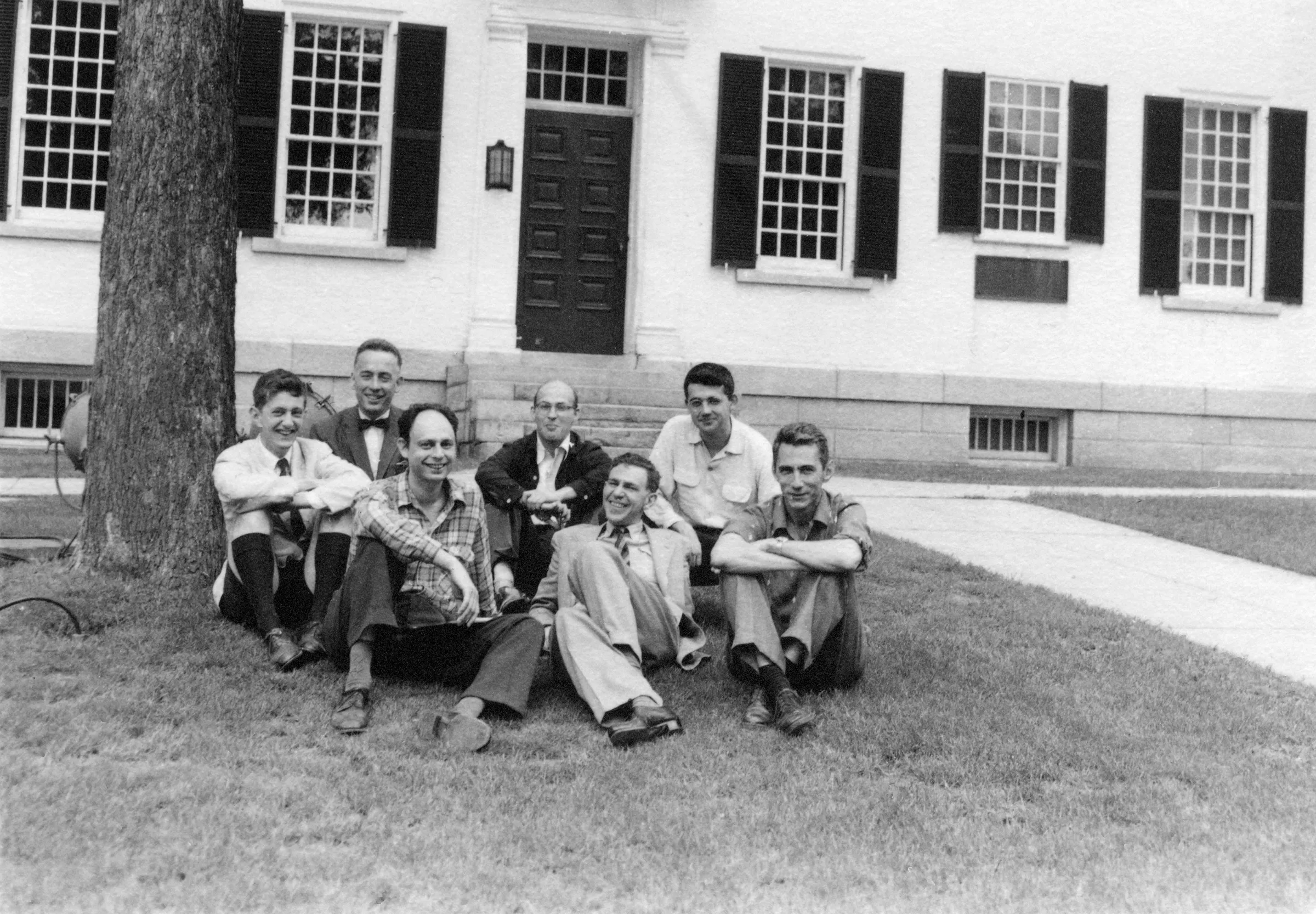
The Rockefeller Foundation underwrote the meeting with a grant of $7,500. The boundaries of the workshop expanded beyond the initial 10-man proposal, as the summer event became host to visitors and guests who came to share ideas and recent work, including Herb Simon and Al Newell, who demoed their Logic Theorist program.
An interesting historical note: the conference seemed like a letdown to most of the participants. In her history of the early years of AI, Machines Who Think, Pamela McCorduck conducted interviews with Minsky, McCarthy, and others about their experience that summer. Most came away disappointed; as McCorduck puts it, they “don’t remember bringing home very solid intellectual souvenirs from Dartmouth.”4
Reading those oral histories in the context of today’s AI boom is a stark reminder: starting simply—just giving an idea a name and providing the initial participants an audience of each other—can eventually turn spectacular.
Starting simply—just giving an idea a name and providing the initial participants an audience of each other—can eventually turn spectacular.
Grants
Grants are another main tool. Grant funding for early-stage projects does more than pay for the work. The grants are usually just enough to cover the costs of experiments or participation, rather than provide a comfortable salary. But grants provide other benefits. First, they are a form of validation—someone valued my idea enough to spend money on it, so it must be worthwhile. Second, they provide a deadline. Once you’ve taken money you’ve implicitly committed to reporting back, which forces action and at least an attempt at progress. Ideally, grants create good constraints and weave a tighter bond among community members. If done poorly, or if too much money enters a scene before the social norms have had time to settle, then resentment can fester and goodwill will evaporate. For this reason, I’m a fan of small, fast grants as a way to catalyze action. We’ve given out more than 300 of these awards over the past few years, all directed by an empowered “science angel” who can make discretionary decisions on grants up to $10,000. We learned many lessons through the process, and confirmed their effectiveness. Mostly, we found that small grants are only useful to individuals with high motivation to see their project through, as opposed to organizations chasing big dollars to close budget gaps. They are self-selecting for people obsessed with a new idea.
Example: Astrobiology
One of the best field-building history books is The Living Universe: NASA and the Development of Astrobiology. It’s notable for nuanced storytelling of the people and ideas that built the field, but also for the specificity of the details. For example, the book has a list of exobiology grants that NASA gave out in the formative years of the field, the period 1959-1964, including the name, subject, and exact dollar amount. The diversity of the grants shows the diversity of concepts, but also the differing theories about how to prioritize experiments. There was no sure thing—no obvious path forward for the field—so building a portfolio of approaches was prudent.
It’s better if these early-stage grant programs can be run by a catalytic person with the power to say “yes, go” and then move quickly to fund. The NASA Ames Exobiology Division had just such a leader in Richard Young. Young tried to fill the gaps between the disciplinary dogma of the NSF and NIH by searching for people who were too interdisciplinary to get funded by the other agencies. Lynn Margulis was a recipient of one of Young’s grants for her work on endosymbiosis, which had been summarily rejected by the NSF’s Cell Biology department. In an interview, she told the authors of The Living Universe that “this early seed money was critical to sustaining their research programs” and enabled more funding down the road. Margulis was just one of many early-career scientists that Young propelled.5
There’s a reason the ARPA programs (and their derivatives) have settled in on the empowered program manager—someone free to make iconoclastic funding decisions. It works.

Journals and Catalogs
The right way to document an emerging field is over time. Journals, periodicals, and catalogs offer an editorial layer that can evolve and grow with the subject. The journal is different from the forum for exchange mentioned earlier, as the format elevates the concepts, theories, and products which emerge from the group dynamics, whether through peer-review or commerce. At their best, journals do more than serve as house organ, just chronicling the proceedings. They also help steer by nudging the participants in exciting directions.
There’s also a slight distinction on the usefulness of journals vs. catalogs. Journals lend an air of scientific legitimacy to the endeavor, whereas catalogs are underrated vehicles for building up an industry. So, a useful rule of thumb: is it a scientific discipline? Journal. Is the goal to create an industry? Catalog. Nowadays, you’d do this online, so the exact format will be fit for purpose, but the spirit of editorial guidance—of writing the bigger story—is still relevant.
Example: DIY Drones
In 2007, while serving as editor-in-chief of WIRED, Chris Anderson came home one weekend with a goal of building two projects with his kids: a remote-control plane and a LEGO Mindstorms robot. His kids weren’t interested, but Anderson was captivated. The serendipitous combination of projects got him thinking: could the sensors from the LEGO kit be used to build an autopilot for the plane?
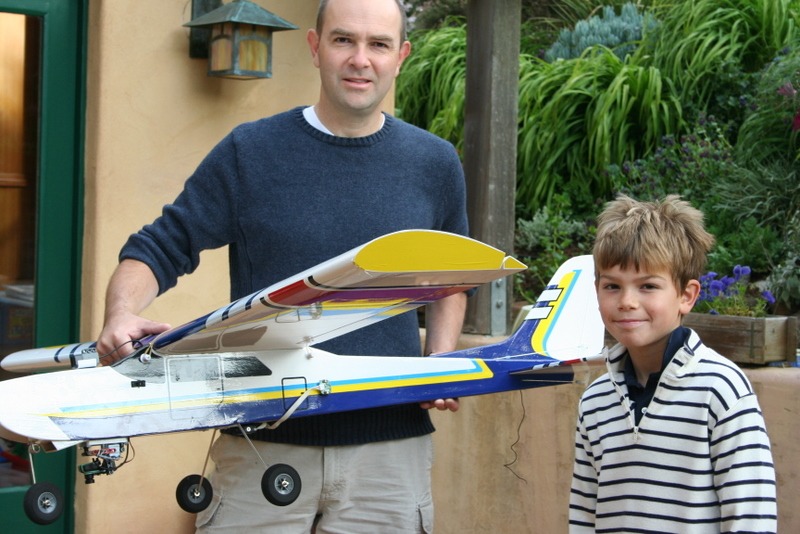
As a writer and journalist, Anderson quickly fell back on his training. He started the website DIYDrones.com as a community site and forum for anyone with similar ambitions. And, boy, was there interest. The website became a social hub for drone hobbyists, soon numbering in the thousands. Anderson provided a narrative throughline with his frequent blog posts, full of community news and technological developments. Soon, he and a co-founder, Jordi Munoz, started a company, 3D Robotics, to provide kits and equipment to others who wanted to build their own drones. The modern drone industry—once the exclusive territory of well-connected defense contractors—grew out of their website.
The business evolved with the drone market, but the website continues to grow, now two decades later. The Unmanned Aerial Vehicle (UAV) industry is now permanently altered by the humble ambitions of the DIY Drones community.
Meetings and Meetups
Meetings are a close relative of the workshop. Instead of one focused gathering, which takes place over the course of a few days, a meeting or meetup plays out in smaller bits, spread out over time and space. The added temporal distribution provides more of an exploratory nature than a focused workshop—time for ideas to sink in, for people to chew on concepts, and maybe change their minds. Perhaps most importantly, the meeting format allows room to actually build things over the course of several sessions—to turn ideas into working prototypes. The best field-building meetings all exhibit this type of show-and-tell flavor. The Homebrew Computer Club would have been pointless if the group simply discussed an idea of Personal Computing, or tried to sketch out a theory of how small, desktop-shaped computers could look. Instead, the ragtag group changed the world by emboldening each other through electronic showmanship. Don’t just say something—do something.
Example: Quantified Self
In 2007, Gary Wolf had a discussion with his editor at WIRED, Kevin Kelly, about how people were using technology—mostly sensors and software—to track their health and personal habits. At the time, social media was all the rage, but Wolf and Kelly were wondering what other technological frontiers were becoming habitable now that the personal computer and the web were firmly established. They decided the Quantified Self was worth exploring. But in order to write about it, they first needed to meet people who were doing it, so they hosted a meetup at Kelly’s house, not knowing exactly who would show up to their event. There was no agenda, save for a whiteboard for anyone to list their name if they wanted to speak and share what they were working on. The creativity—from extreme personal experiments to elaborate data visualizations—blew Wolf and Kelly away. They had found a rich vein of possibilities, and the Quantified Self became the flag to rally around.
Over time, Wolf and the team refined and perfected the art of the meetup, creating a protocol that discouraged polished startup presentations (which were common as the wearables industry was starting to boom) in favor of the dramatic personal explorations they had seen at their original meeting. They open-sourced the idea and allowed for Quantified Self meetups to self-host around the world. At the peak of the movement, there were more than a hundred chapters in dozens of countries. Quantified Self, as a forum and format, has evolved and blended into other technological movements and ideas, but the sedimentary layer of contribution is firmly established in our modern lives—all the step-counting gadgets and glucose monitors bear the mark.
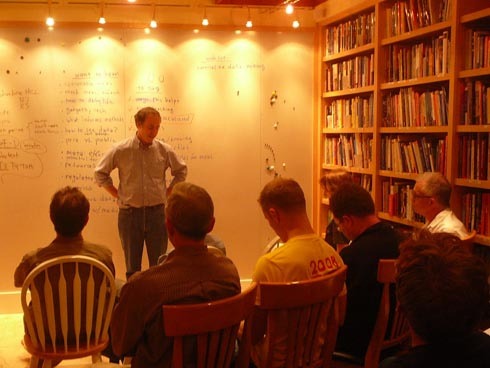
Perhaps most importantly, the meeting format allows room to actually build things over the course of several sessions—to turn ideas into working prototypes.
Competitions and Prizes
I’m hesitant to promote prizes as a tactic, but they deserve mention. There’s been a prize craze over the past few decades, starting with XPrize and permeating through federal governments and philanthropies. Too many prize competitions are poorly run, and actually do more to discourage a potential community than enable new ideas. In the context of field building, a well-run competition does more to promote and celebrate participation rather than trying to crown an individual champion. Good prize competitions don’t sacrifice the hopes of many for the adoration of a few. That’s short-term thinking, and perilous for an aspiring field.
Example: Synthetic Biology
Synthetic Biology was conceived by applying the logic and precision of electrical and mechanical engineering to the realm of molecules, DNA, and life. And the field itself was created with the same level of intention—it was grown from scratch. The modern origins trace to Tom Knight and Drew Endy, who created the Synthetic Biology Working Group while working together at MIT in 2002. The beginnings were humble and humbling. They got advice from the famous electrical engineering professor Lynn Conway to “go meta” and focus on the people who might one day use these tools. To make Synthetic Biology a thing, start by making synthetic biologists.
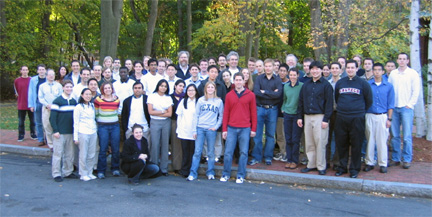
In 2003, Knight, Endy, and their colleague Randy Rettberg organized an independent activities period (IAP) course to get students building more of the standardized biological parts that would be needed to abstract biological construction. The class worked well enough that the National Science Foundation gave them a grant to expand the course the following year to five schools. And it kept growing from there. The course turned into a “competition” called the International Genetically Engineered Machines (iGEM) competition, which has now had more than 100,000 participants, and the annual iGEM Jamboree in Paris welcomes more than 400 competing teams to its main event every year.
One of their innovations, as Endy explained to Stewart Brand onstage in San Francisco in 2014, was creating a novel medal system. Every team qualifies for a medal—bronze, silver, or gold—by completing various requirements during the course of the competition, with the highest awards going to any team that contributes a “biobrick” back into the growing pool of standardized biological parts. Theoretically, everyone can become a gold medalist. And many do, which sends their hometown press into a flurry of celebration—good for the resume and the confidence of young inventors. iGEM managed to create a giant collaboration racket disguised as a competition. Far more consequential: they’re creating the next generation of bioengineers, each and every year.
Facility/Place-Based
Scientists love to dream about new institutions—places just like their current organization, including facilities and job security, but different in all the small ways that would allow them to really focus, like less bureaucracy and administrative meddling. Thus, fresh scientific institutions are continually cropping up, always with a bold vision and an endless appetite for philanthropic support.
These new institutional attempts try to replicate the feeling of the old—the good parts, anyway, like wet labs and experimental infrastructure—and often feel the need to inhabit an actual, physical building to house their dreams. But for a nascent field, real estate is a risky bet. It increases the burn rate by introducing a host of additional costs, like insurance and maintenance, not to mention the people needed to help run the place.
It can be done! Some field builders have wealthy benefactors. Others find cheap, low-road buildings to gather in. When it works, these places can be magical. When it doesn’t, the cost and stress can smother an otherwise promising research direction. Best to use this tactic with financial prudence.
Example: Complexity Science
“The place was chaos…” wrote M. Mitchell Waldrop of the early Santa Fe Institute (SFI) offices in his book Complexity: The Emerging Science at the Edge of Order and Chaos, “The chaotic convent somehow managed to convey a sense of intellectual ferment in the midst of peace, shelter, and serenity.”6
George Cowan, the founder of SFI, had signed a lease in the fall of 1986 to rent the Cristo Rey Convent near the famous art galleries of Canyon Road. He signed the lease soon after incorporating, but before any major funder had committed to long-term support. The small team needed a place to host staff and visitors, having already planned to organize several workshops the following summer.
Santa Fe was no accident. Cowan and a host of other senior fellows from Los Alamos National Laboratory had conceived of the idea for an interdisciplinary institute over lunches at the famous physics outpost, and Santa Fe’s proximity seemed ideal. The goal of the institute was to bring scientists from multiple disciplines to study complexity in all its forms, hoping to find broader conceptual lessons by weaving various strands of thought. And they have done just that over the past 40 years of its existence. The institute has been the center of a field of study—Complex Adaptive Systems, sometimes referred to as Complexity Research—and derivative subfields. For Cowan, colleagues, and successors, the place-based model of field building has proven fruitful.
Artifacts, Books, or “Vision Papers”
Michael Nielsen wrote a primer on Vision Papers which, as he notes, “often play a crucial role in instigating new fields of science” and are also surprisingly rare. He starts with a list of examples, including papers from Alan Kay, Alan Turing, and Alexander Rich, which provides a sense of the genre. They’re mostly all scientific paper-like in their shape and structure, although Nielsen includes books and other artifacts in the list. He then goes on to analyze why these papers seem to be working—what they’re doing— as well as adding speculation about why they aren’t more common. The papers all sketched out a field before one existed, sometimes years before any actual momentum. More than anything, Vision Papers seem to be signposts to a potential future—not a map or a precise recipe, but a name and direction, enough to entice other would-be explorers. Vision Papers are often part of an early field formation, usually with naming rights and recognition in case of eventual success.
Example: Nanotechnology
The field of Nanotechnology offers a useful comparative history—a tale of two Vision Papers.
On December 29th, 1959, Richard Feynman delivered his famous “There’s Plenty of Room at the Bottom” talk at Caltech. The transcript was published the following year, and it’s still—more than sixty years later—eminently readable and inspiring. He does exactly what Nielsen describes by drawing attention to the technological and scientific possibility of engineering with atomic precision—of making very small things. He uses vivid examples that stir the imagination, like the Encyclopaedia Britannica on the head of a pin or the unusual forces put upon tiny electric circuits. The tone of the paper is a challenge, including the casual offer of two $1,000 prizes, with daring language throughout:
“Now comes the interesting question: How do we make such a tiny mechanism? I leave that to you.”
K. Eric Drexler cited Feynman and expanded on the ideas in his book Engines of Creation, which was published in 1986. Drexler uses slightly different terms than Feynman, with an emphasis on molecular engineering and assemblers as a distinct outcome of this potential field. The book also weaves in a broader techno-futurist story—advancing AI, space colonies, and biotechnology—that feels familiar today, including the consideration of consequences and responsibility.
On the surface and in isolation, “Plenty of Room” and Engines of Creation are doing Vision Paper-like work: surprising futures at nano scales, with blinking arrows for research directions. However, the impact of the two artifacts was wildly different. The time separating the writings—roughly twenty-five years, or a generation—provides a useful buffer for analysis. Chris Toumey did the research and found that Feynman’s original talk and transcript had little scientific impact or pickup from his peers—initially. Then in the 1980s, largely thanks to the popularizing work of Drexler, people found the original and began citing it with more frequency. Toumey then argues that it was the invention of the scanning tunneling microscope which actually advanced the field. So, Drexler’s timing was better, but so were his tactics. He didn’t stop with the Vision Paper. He co-founded the Foresight Institute, which held workshops and undertook the tactical work of field building. It was a vision in motion.
Vision Papers seem to be signposts to a potential future—not a map or a precise recipe, but a name and direction, enough to entice other would-be explorers.
The story gets more complicated from there, as all fields do when they find uptake and success. There was a multi-billion-dollar federal program, the National Nanotechnology Initiative, which grabbed the name and summarily ostracized Drexler’s ideas for molecular manufacturing.
But the field moves on, and the Foresight Institute is still at it today, applying its well-honed field-building toolbox at a variety of frontiers, including molecular engineering.
Language-Making
The best working theory for how science advances comes from Peter Galison. In his book, Image & Logic: A Material Culture of Microphysics, he proposes that science is made up of different subcultures, broadly divided into three camps: theorists, experimenters, and instrument builders. And his theory is that science progresses through interconnected contributions from all three of these groups. A new instrument inspires a new experiment which gives rise to a new theory. Or a new theory makes a new experiment or instrument conceivable, and so on. The interplay is constant, uneven, and surprising.
“Each subculture has its own rhythms of change, each has its own standards of demonstration, and each is embedded differently in the wider culture of institutions, practices, inventions, and ideas.”7
Galison introduces the concept of the “trading zone,” which is the place at which these different communities interact and exchange ideas. He uses anthropological terms to describe these locations, using the example of wartime radar as one such zone where experimentalists and theorists formed a shared understanding of a field. A language emerged, which Galison likens to a pidgin or creole, using terms from linguistics to explain this form of cultural evolution.
Galison’s scholarship offers a clear lesson for field builders: if you’re in unexplored territory, expect to be language-making.
In The Engine of Scientific Discovery, Alexander Krauss makes the case that scientific tool-building is the main event. He charted more than 750 major scientific discoveries since 1595, including all the Nobel Prizes, and found a striking connection between the discovery and a newly available tool or method.
A new instrument inspires a new experiment which gives rise to a new theory. Or a new theory makes a new experiment or instrument conceivable, and so on. The interplay is constant, uneven, and surprising.
Example: Bioelectricity
Michael Levin has earned a reputation as a pioneering scientist through his experiments manipulating cellular development in frogs and the co-creation of “xenobots,” which are small-scale, programmable organisms. His work helped revive interest in the field of Bioelectricity, which had been sidelined as fringe during the rise of Molecular Biology, and has helped push the boundaries of Synthetic Biology. More recently, his curiosity and experimental ambition have expanded to include ideas about the nature of intelligence and life itself.
Levin is a natural field builder, unbound from the strictures of discipline. He theorizes and experiments, certainly, but he also brings others along for the adventure. He is a great explainer, in addition to being a great scientist. I found his “glossary” to be telling—and smart. He created a list of words that others may come across in his talks and papers, and began collecting them in one place. His initial list has been expanded on the Bioelectricity Nexus, a field-building website created by entrepreneur Joel Dietz.
Novel research doesn’t happen in complete isolation—a field helps move it further, faster. Levin and Dietz get right to the point: field building is language-making, so make it easy.
Tools
Tools, both instruments and methods, are the unsung heroes of scientific progress. They open the door to new questions, insights, and fields. Tools are also woefully underappreciated, overshadowed by the mythology of genius and the incentive of publication. Scientists are always fashioning instruments for their experiments, or lobbying for budget increases to equip their labs, but rarely do tools center in the picture. They should.
I recommend the whole book to skeptics—anyone still clinging to a Kuhnian, paradigm-based view of science—as well as my already-convinced, tool-pilled friends (finally, the hard data behind our hunch). But there are particular aspects of Krauss' research that are relevant here. There’s an entire chapter on how tools create disciplines. In fact, he shows the most powerful tools sparked many new fields.
"Spectrometers launched fields such as molecular spectroscopy and exoplanetary science. Electron microscopes triggered fields such as modern cell biology and electron microscopy. X-ray methods gave birth to fields such as molecular biology and x-ray crystallography... A powerful insight emerged from the fact that each of these tools kick-started multiple fields: what links these diverse fields is not a particular theory, research team, more funding or even serendipity—it is that each relied on the same powerful tool, used in remarkably different domains."8
If you want to find a ripe field-building opportunity, look for the toolmakers. Krauss' research had more surprises there. Many were young, often "low-profile researchers" or "academic outsiders" who are effective interdisciplinary workers. Even more hopeful for our purposes, these breakthrough-inducing tools are often cheap, with Krauss finding "Most of these tools for discovery were developed with small budgets."
If you’re skimming this essay, looking for a hint on your Field Building Accelerator application, here it is: we are very biased towards new tools and methods, especially when applied in novel contexts.
Example: Nuclear Magnetic Resonance
In a chapter of Instituting Science: The Cultural Production of Scientific Disciplines co-written with Christophe Lécuyer, Timothy Lenoir tells the story of Varian Associates, a research company in Palo Alto, CA, which played a decisive role in developing Nuclear Magnetic Resonance (NMR) tools. Lenoir and Lécuyer use the history of Varian as a case study in disproving the linear model of science, in which academic-based basic research flows one way: outward into the world via companies and applied research and development, eventually meeting some consumer market. It’s much more complicated than that, obviously.
Varian Associates was formed by a group of physicists and engineers who had met at Stanford before World War II and worked together during it at Sperry Gyroscope, where, flush with wartime funding, they had the opportunity to work as a team and the autonomy to pursue their best ideas. They formed their company to recreate that spirit—that timeless scientific siren—of working on challenging technical problems on their own terms. The culture of the company was centered on research and development, as well as the stubborn optimism that they were smart enough to invent their way to profitability.
Nuclear Magnetic Resonance had first been described by the physicist Isidor Rabi in 1938, a decade before the formation of the company. Felix Bloch, with his lab at Stanford, extended Rabi’s discovery from molecular beams to ordinary liquids (Edward Purcell did the same for solids at Harvard, independently, and they shared the Nobel Prize in Physics in 1952). Stanford “doubted the commercial prospects,” so Bloch sought out the nearby Varian shop to help secure a patent, which they did. From there, the story takes on a shape similar to that of a modern startup: continually refined designs, ever more efficient, owing to contributions from newcomers, as well as a constant wondering about the market for such a device. Product/market fit was elusive until they focused on chemists. NMR, as it improved in both accessibility and accuracy, was proving to be a stellar tool for chemists wishing to quickly determine the structure of organic compounds. The tool completely reshaped the field. And it led to many other tools. One example is magnetic resonance imaging (MRI), which built in part on the scientific foundation laid by Richard Ernst and Weston Anderson at Varian when they applied a Fourier transform to the NMR signal.
Too often, toolmaking is the forgotten forge of scientific progress, and industry inventors are seen as a separate wing in the scientific project. But it’s all connected. Lenoir and Lécuyer close with a charge:
“As the example of Varian Associates’ development of NMR shows, industry scientists and engineers should be thought of as more than makers of devices; their success depends in large part on their ability to build disciplines.”9
Technology isn’t enough on its own—it needs the right community and conditions to find an application on the frontiers of knowledge. Field building can help.
Conclusion
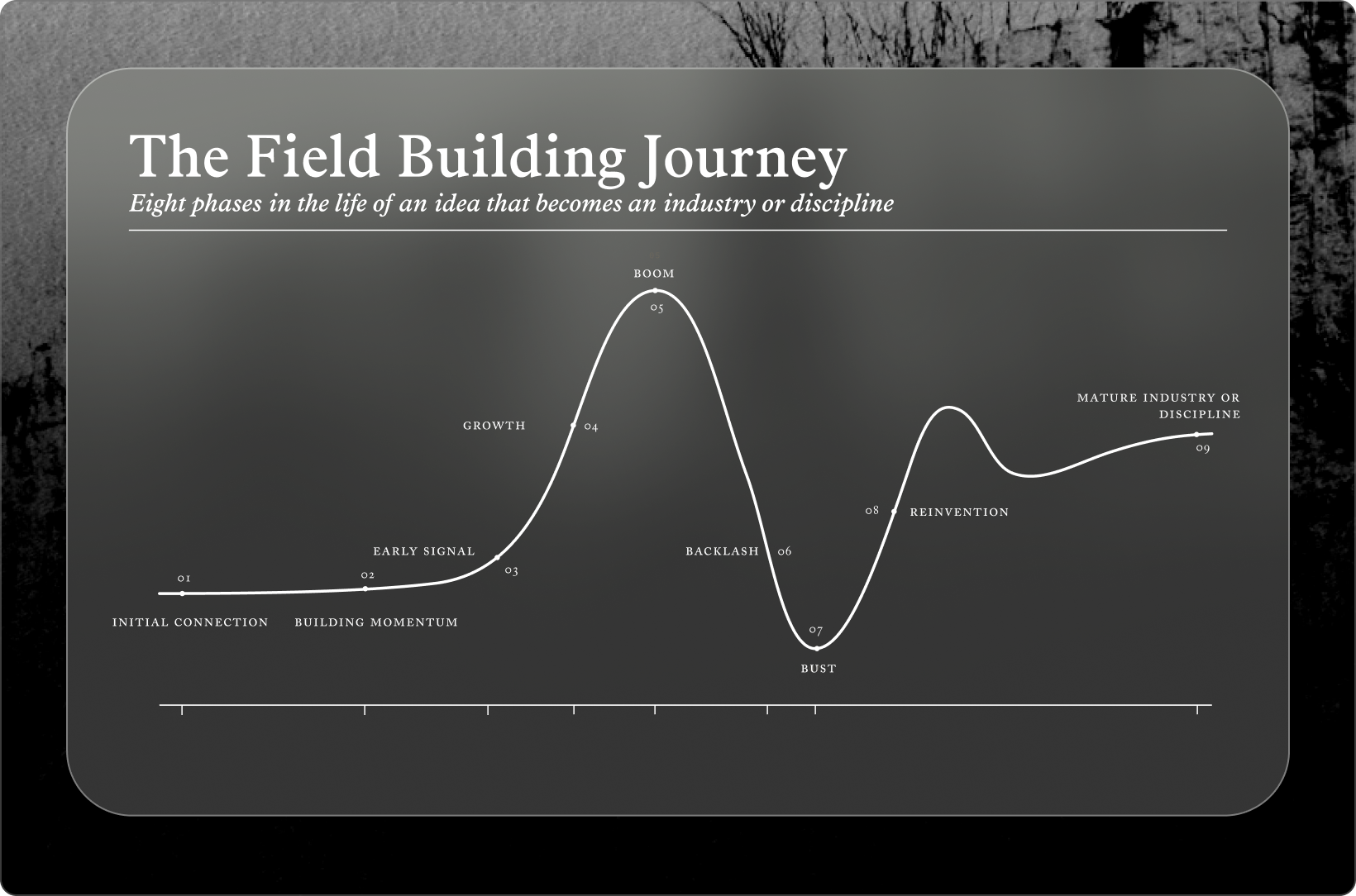
Field building is a long game, often taking years for a discipline to cohere and gain traction. And the tactics I've listed above are only part of the starting. The game changes once a field is up and running. And changes again once a field has matured—once the field builder (or rebuilder) has navigated the boom and bust cycles of resource availability and attention. Those chapters of the story will get their own essays, perhaps, in the future.
There's a clean line here—the end of the beginning—thanks to a working paper from Luis Bettencourt and David Kaiser. In their paper "Formation of Scientific Fields as a Universal Topological Transition", Bettencourt and Kaiser propose that field formation can be shown and understood as a specific point where a social network congeals—or "the moment at which shared concepts and techniques allow widespread exchange of ideas and collaboration."
Technology isn’t enough on its own—it needs the right community and conditions to find an application on the frontiers of knowledge. Field building can help.
A field starts out as a loose and distant set of could-be collaborators, gradually connects, and then—at a critical threshold—snaps together into a recognizable whole, a shift visible in the changing topology of co-authorship networks. A new field has arrived; people, funding, and hype can all come rushing in.
Then the cycle must begin again—time for the next set of explorers to break away.
It could be you. If you want to try your hand at field building—if you have an idea that needs more minds, especially one involving a new tool or method—apply to the Field Building Accelerator. It’s a part-time commitment, and I promise it will be full-on interesting.